Contents
Subscribe to our newsletter
Subscribe to the elia newsletter for exclusive product updates and industry best practices. You can unsubscribe at any time.
Thank you! You're subscribed.
Oops! Something went wrong while submitting the form.

.png)
%20(2).png)
The modern office is in flux.
Desks sit empty on Mondays, meeting rooms overflow on Wednesdays, and no two weeks look the same. In this dynamic environment, mastering space management means leaning on something more reliable than gut instinct: data. Every square foot of our office tells a story, and meeting spaces are often the most misunderstood characters. They appear fully booked, yet they sit empty. They seem busy, yet employees struggle to find a room when they need one. This disconnect is exactly what conference room analytics aims to solve.
By collecting data and analyzing it with intention, we can unlock actionable insights about room occupancy, scheduling behavior, and space utilization. In this guide, we’ll walk through what conference room analytics really means, the problems it solves, and how to leverage it to transform your workplace into a smarter, more productive environment.
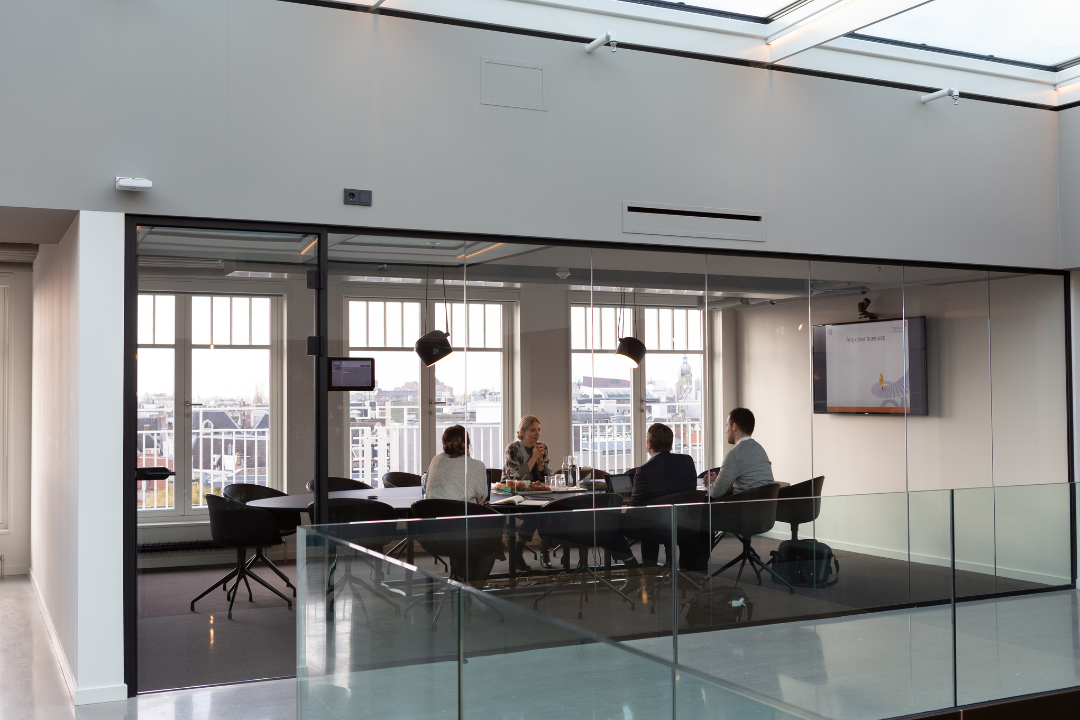
Conference room analytics is the practice of collecting, interpreting, and acting on data from meeting spaces to make informed decisions about how those spaces are used. Think of it as turning every room into a source of real time data and insight. It’s not just about how often rooms are booked. It’s about whether they’re actually being used, who’s using them, when, and how often. This process gives us the ability to identify trends, eliminate inefficiencies, and align office resources with actual business needs.
For decision-makers, this isn’t just another tool. It’s a critical layer of business intelligence that supports better space planning, enhances collaboration, and increases employee engagement. Meeting room analytics helps teams move from guessing to knowing, and from reacting to optimizing.
When we talk about conference room analytics, we are really referring to a variety of meeting room usage metrics. Here are the most important ones:
These metrics give facilities managers and operations teams a clear picture of how meeting rooms are performing and where adjustments are needed.
Meeting room analytics relies on a few key technologies that work together to deliver insights:
Together, these tools allow us to collect high-quality, real-time and historical data for smarter space management.
The problem: Rooms are often booked but remain unused. Large conference rooms host only two or three people, while smaller spaces go unnoticed.
How analytics help: They reveal usage patterns and occupancy trends that show which rooms are underused. This helps you reclaim or repurpose space.
Why it matters: When we reduce unused space, we cut unnecessary real estate costs and improve how the office is laid out.
The problem: Some rooms are in constant demand while others are barely used. Employees get frustrated when they can’t find a room, or worse, when their reserved room is already taken.
How analytics help: They highlight peak usage periods, track no-shows, and provide real-time availability so people can quickly find open rooms.
Why it matters: Better scheduling systems mean fewer interruptions, increased productivity, and a more positive employee experience.
The problem: Small meetings take place in oversized rooms, while large teams are crammed into huddle spaces.
How analytics help: By analyzing historical data, you can match room capacity to actual group sizes and make adjustments.
Why it matters: Efficient resource allocation leads to better collaboration and less wasted space.
The problem: In a hybrid workplace, usage is unpredictable. Some days rooms are completely free, and others they are all booked.
How analytics help: They track actual usage across hybrid teams so you can adjust room availability and space planning.
Why it matters: Supporting flexible work while making the most of your meeting rooms is key to modern workplace efficiency.
The problem: Employees lose valuable time searching for available rooms or dealing with booking conflicts.
How analytics help: Real-time room availability and predictive insights help reduce frustration and allow people to focus on their work.
Why it matters: A smooth experience in the workplace leads to higher employee satisfaction and better business results.

Here’s a simple roadmap for using room analytics to improve your meeting spaces and office layout.
Begin by reviewing the current state of your office’s meeting rooms. Identify which spaces are consistently underused, which are frequently overbooked, and which ones are mismatched in terms of their size or capacity compared to how they’re actually used. This step helps establish a clear baseline and highlights immediate opportunities to reclaim wasted space or better align your rooms with employee needs.
Next, define the key performance indicators that will guide your optimization strategy. Room utilization rate should be a primary focus, as it measures how effectively each room is used during its available hours. You’ll also want to monitor occupancy across different room types to ensure your space mix aligns with real-world demand. The rate of no-shows gives insight into booking behavior and system reliability, while the booking-to-attendance ratio reveals how often meetings actually happen compared to how often rooms are reserved.
Once your KPIs are in place, start combining real-time data with long-term trends to inform decision-making. Real-time availability tells you what’s happening in the moment, while historical data reveals deeper usage patterns. Look for recurring trends in meeting frequency, popular time slots, and which rooms are favored or ignored. These patterns help you make informed decisions about how to allocate resources and anticipate future demand.
Armed with clear data and performance insights, you can begin making meaningful space planning decisions. Review your findings alongside team feedback to ensure any changes reflect both data and employee experience. This might involve reassigning certain rooms, reconfiguring layouts to better fit actual usage, or introducing more collaborative spaces or smaller huddle rooms if the data supports it. You may also find that improving signage or streamlining your booking workflows leads to fewer conflicts and smoother scheduling overall.
Finally, treat conference room analytics as a continuous process rather than a one-time initiative. Set a regular cadence—monthly or quarterly—to review your space performance. Use these check-ins to track progress against your KPIs, measure improvements in room utilization and employee satisfaction, and adjust your approach as your workplace evolves. Over time, this ongoing refinement leads to a smarter, more responsive office environment that meets the needs of your teams.

Bookings don’t always tell the full story. Rooms may be reserved but never used.
To get a complete picture, use occupancy sensors or check-in systems to confirm real usage.
Data without action is just noise. Too often, teams collect insights but never use them to make real changes.
Be intentional. Let the analytics guide your room configurations, policies, and processes.
If you make changes without telling employees why, you may face resistance.
Explain the reason behind changes and ask for feedback. Collaboration improves adoption.
Tools that lack integrations or in-depth reporting may work for a small office but fall short for larger teams.
Choose solutions that are built for hybrid work and can grow with you.
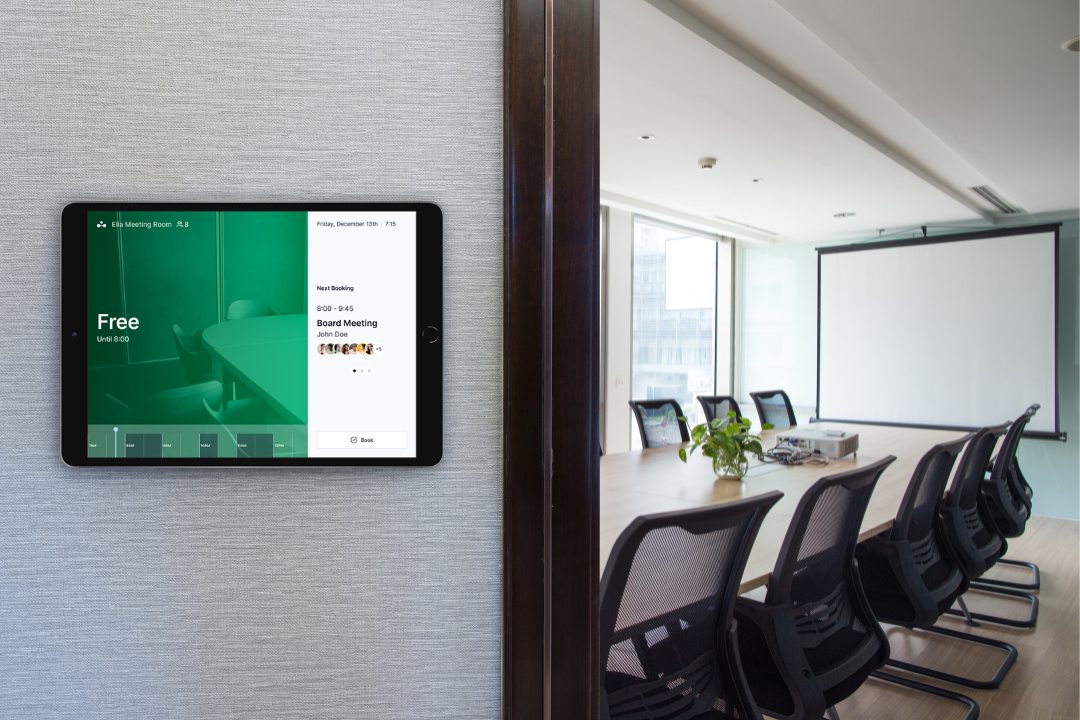
It’s time to move away from manual methods and make the shift to data-backed decisions. Room analytics are powerful, but only if you have the right platform.
elia is built for today’s hybrid workplaces and multi-location teams. It combines everything you need to track, analyze, and improve your meeting spaces.
Here’s why elia stands out:
Whether you want to identify underutilized spaces, reduce scheduling conflicts, or improve the experience of meeting organizers, elia provides the insights and automation you need.
Book a demo with elia today and take the first step toward smarter workplace management.
Answers to Your Common Queries
![Conference Room Automation: The Complete Guide to Smarter Meetings [2026]](https://cdn.prod.website-files.com/64f88f68249f7cafe071d150/69383a535f2d6b279898c8ef_151.png)

%20(1).png)